

Thousands killed by landmines and explosive ordnance following 14 years of conflict
MAG is scaling up its operations in Syria as a deepening humanitarian crisis leaves dozens of people killed or injured every week by landmines and unexploded ordnance.
New deminers, community liaison staff and medics are being trained at a new operating base in Hama, in west Syria, and will be deployed in the coming weeks.
MAG is the biggest humanitarian demining organisation in the wider Middle East – and the expansion comes as it marks its 10th year of operations in Syria, having previously worked in the north east of the country in Raqqa and Hasakeh governates, where it maintains a strong presence.
MAG Middle East Regional Director Najat El Hamri said: “Syria faces a landmine emergency which is almost certainly the worst in the world right now in terms of casualties. We are hearing reports of scores of casualties being taken to hospitals every month.
“We are in a race against time to save lives.”
The latest data from the NGO safety organisation INSO suggests some 738 people were killed and 1,293 injured in the 16-month period between the fall of the Assad regime in December 2024 and March this year. This is almost certainly an under-reporting of the scale of the problem.
The new MAG teams being trained in Hama represent the first phase of a growth in operations over the coming year that will take total staff numbers in the country to some 350.
They will be tasked with dealing with a wide range of contamination including landmines, cluster bombs, improvised explosive devices and unexploded grenades and air-dropped bombs.
Ms El Hamri added: “The contamination is preventing displaced people from safely returning to their homes, hindering agricultural production and holding back attempts to restore essential civilian infrastructure, such as schools and health facilities.”
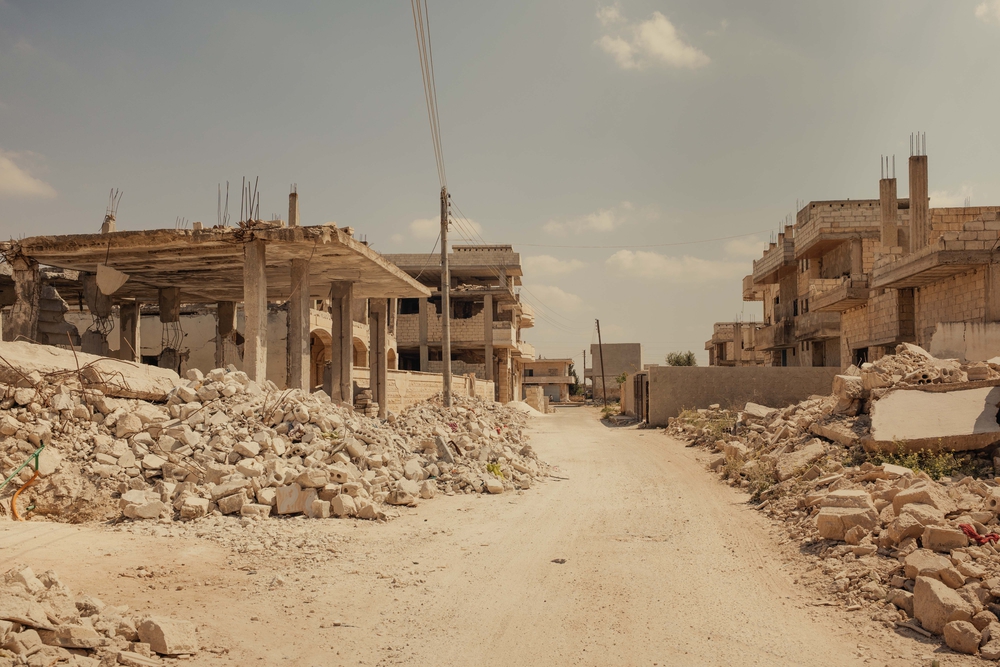
MAG Technical Field Manager Mofida Majzoub said: “The conflict here was so intense and shifted over the years as the battle lines moved. That is why so many areas – including large areas of farmland and densely populated communities – have dense and complex contamination.
“Parts of many villages and towns have been reduced to rubble but people are trying to return to resume their lives after being displaced in the big cities or in Turkey or Lebanon.
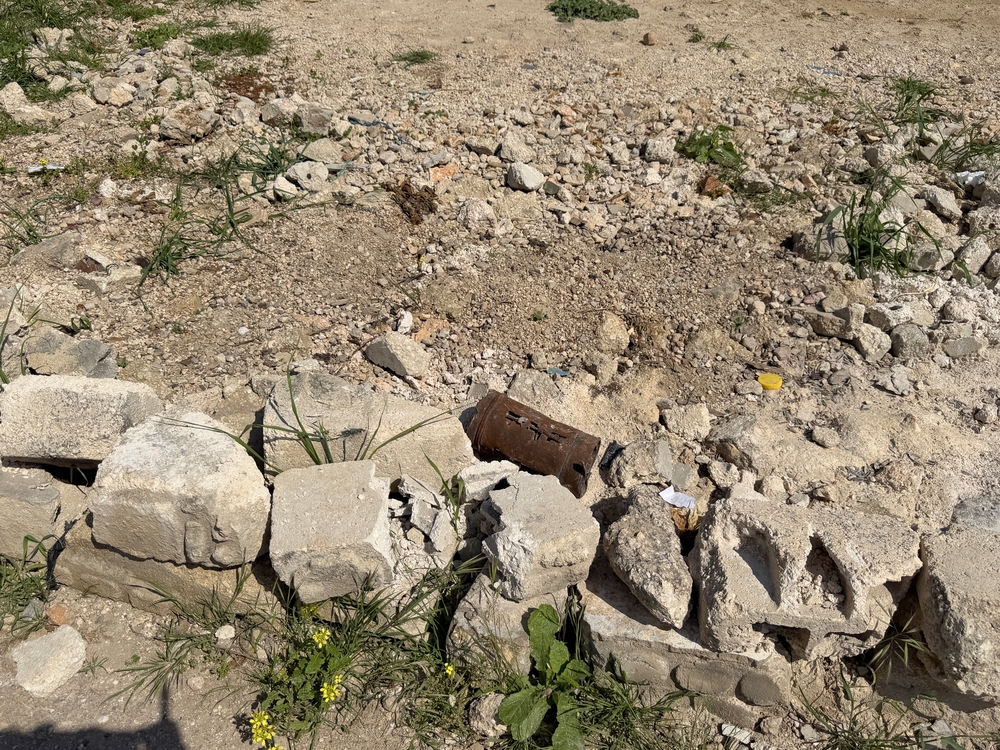
“When they return they are encountering large numbers of anti-personnel mines, anti-tank mines, cluster munitions and huge air-dropped bombs that have failed to explode.
“We are also seeing improvised explosive devices (IEDs) that have been linked to conventional landmines – this will make our work so much harder and more dangerous.
“In one village, they had even planted IEDs around the graveyard.
“Many devices will be lodged in the rubble of destroyed or partially destroyed homes but schools, mosques and other public buildings are also affected. The contamination is a major barrier to reconstruction and to post-conflict recovery. How can they rebuild their homes when there is a daily risk of death or injury?
“We have also found and are working on very large minefields – some as big as 35km long – that were laid by the former regime.
“One of the biggest impacts is that families whose livelihoods are based on agriculture feel like they have no choice but to continue farming, even when they suspect their land has been mined.”
MAG’s work in Syria is supported by the governments of Canada, Germany, the Netherlands, Norway, and the United States.
After years of displacement, families are returning to homes littered with the legacy of war
For 14 years, Awad, also known as Abu Hussam, lived away from home. Displaced by years of conflict, he spent much of that time living in a tent with his family, holding on to one simple dream: the day his family would return and once again have a roof over their heads.
When the moment finally came to return, and after the liberation, the feeling was overwhelming. Like many Syrians who have waited years to go home, Awad did not want to wait a moment longer.
But Syria’s land has changed.
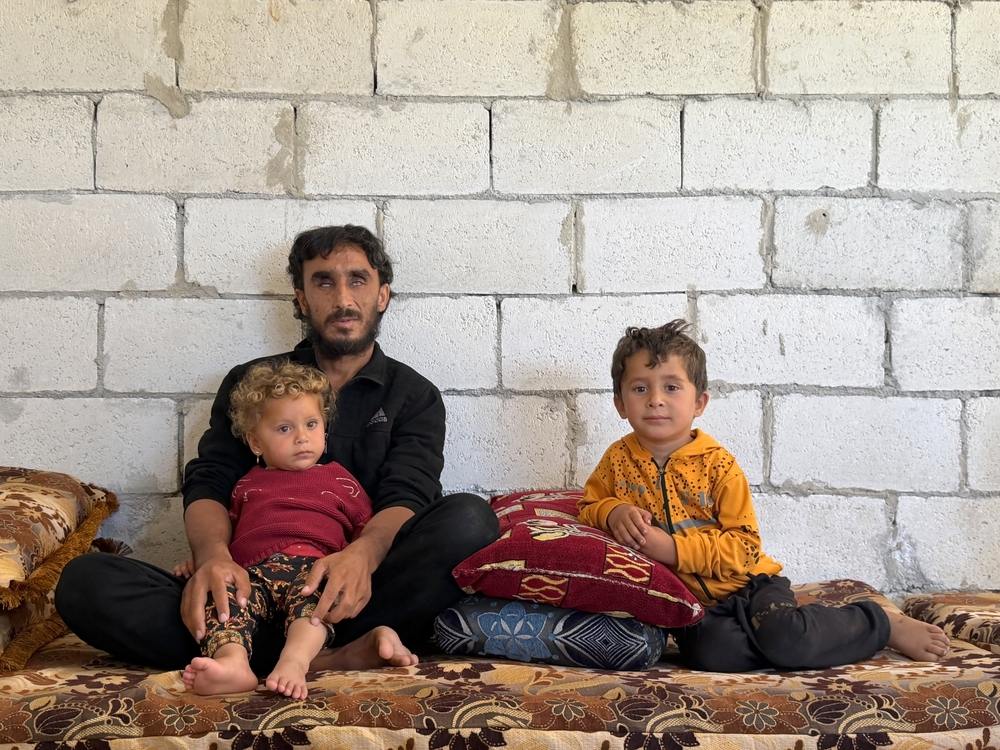
Years of conflict have left an unprecedented level of contamination across the country, with landmines and other unexploded remnants of war scattered in places where families are now trying to return and restart their lives. For Awad, the joy of going home quickly turned into a life-changing tragedy.
A landmine exploded while he was travelling in a vehicle back to his town, Hamameyat. He was first rushed to Sqifieh Hospital, but the hospital did not have the capacity to manage the severity of his injuries. He was then transferred to Hama Hospital, where doctors immediately understood the extent of the damage. Awad had lost his sight. Both of his eyes were severely injured, and his jaw was broken.
He remained unconscious in the hospital for 15 days. When he woke up, his life had changed forever.
As a father of three, Awad now finds himself unable to provide for his family in the way he once hoped. “If I can send a message to all of Syria, I would say: don’t ruin your happiness simply because you couldn’t wait,” Awad says. “We waited 14 years. We can wait a bit longer.”
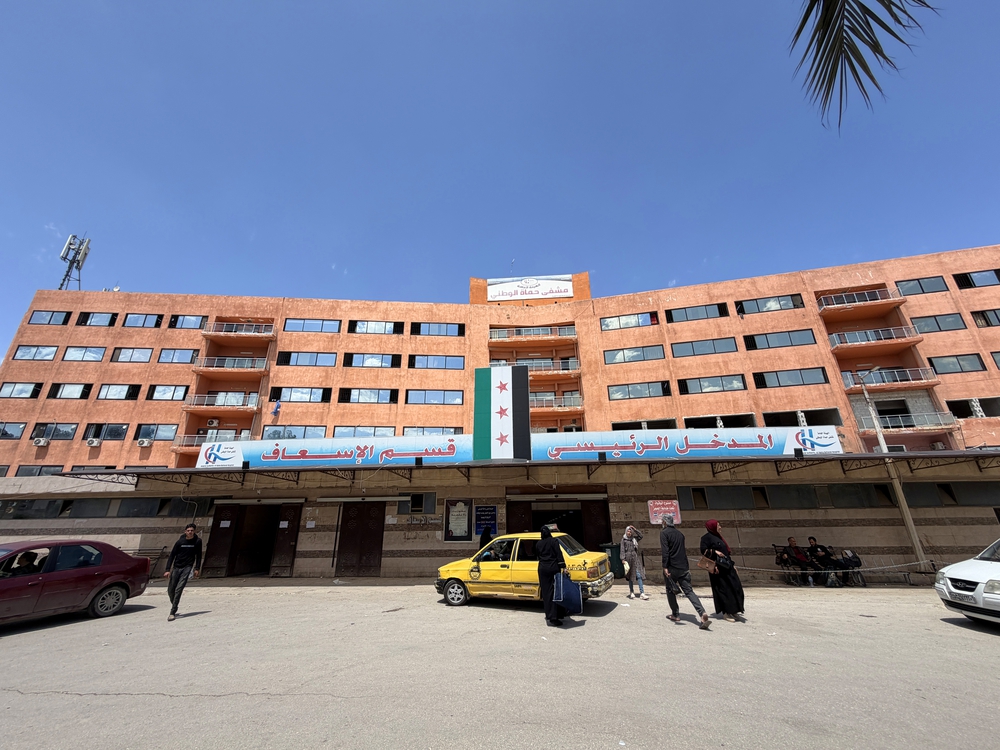
At Hama Hospital, staff are seeing the consequences of this contamination first-hand. Emad Mohammad, Head of the Nursing Department at the hospital, says the facility does not always have the specialist doctors needed to treat complex injuries caused by landmine explosions. In cases where someone loses a limb, the hospital also lacks prosthetic capabilities.
In the first three months of 2026 alone, 27 people injured by landmine explosions were brought to Hama Hospital. All survived, but not without serious and life-changing loss. In many cases, the explosions were linked to families returning home without being aware of the danger waiting for them.
MAG is expanding its work in Syria with a mission to see Syria free of landmines. In Hama, MAG is currently training new deminers and clearance teams who will be deployed in pairs across Syria. MAG is also training five Community Liaison team members to be deployed in Hama Governorate to help families better understand the risks before they return and to support the clearance of contaminated land around the community.
This work will help communities identify danger and understand safer behaviour before making the journey back to places they have waited years to see again.
Darren Cormack, MAG Chief Executive, said: “Families like Awad's should be able to farm and tend to their land and families without the lurking fear of landmines, and that’s what MAG is trying to do in this community, to make this land safe again."
Across Syria, MAG is the largest mine action operator. To date, MAG has released more than 52 million square metres of land, destroyed more than 81,000 improvised mines and other items of ordnance, and reached 880,000 people with Explosive Ordnance Risk Education messages.


