

In response to the escalation of hostilities in Lebanon in March, MAG teams rapidly mobilised an emergency response to deliver life-saving education messages on the threats of explosive weapons. Three months on from the onset of the crisis in the Middle East, we look at what has been achieved in Lebanon to keep communities safe.
Since the beginning of MAG’s emergency response, over 17,500 square metres have been cleared of explosive ordnance across Chouf district in Mount Lebanon and Jezzine in South Lebanon.
Almost 250 explosive ordnance risk education sessions have been delivered to 3,862 people, sharing vital lessons on how to recognise, report and respond to explosive ordnance, as well as encouraging communities to avoid hazards by staying away from rubble and unsafe structures. Online risk education sessions were also delivered for frontline workers, reaching 473 people.
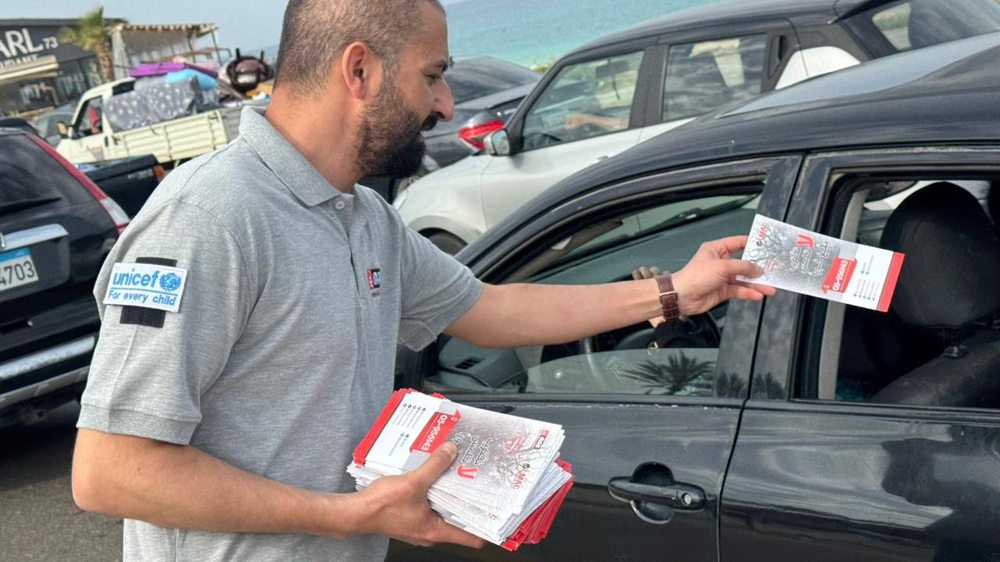
Where in-person risk education is not possible for remote or harder to reach communities, Digital Explosive Ordnance Risk Education campaigns have reached over 6.5 million with safety messages through platforms such as Facebook, Instagram and X.
This essential information has been repeated through the distribution of printed risk education materials. To date, over 224,000 materials have been distributed, including brochures, flyers, posters, and even colouring books designed to educate children on the risks around them. These printed materials have reached 90,741 people, 44,741 of whom were children.
Alongside our emergency response, MAG teams have been resuming clearance operations in Mount Lebanon, and are preparing to launch operations in communities in southern Lebanon, which have been affected by recent contamination, as soon as conditions allow.
These recent attacks have added an additional layer of explosive ordnance contamination on top of those left by previous conflicts. Following escalations in 2024, the Lebanese Mine Action Centre reported roughly two million square metres of new contamination. In just the first month of the recent conflict alone, data indicated that communities across Lebanon were bombarded with more than 2,500 new aerial, drone, missile and artillery strikes.
Photo taken with safety measures in place
Speaking on the impact of the emergency response, MAG Programme Manager for Lebanon, Hiba Ghandour, said: “Communities across Lebanon have had to make difficult decisions about returning to their homes since the ceasefire agreement. The scale of contamination means that clearance activities alone cannot reach every affected community immediately. Every risk education session that our teams deliver, or safety message distributed, is an opportunity to share potentially life-saving information to communities at-risk.”
For many, it is the moment after the bombs have stopped falling when the deadliest dangers lie in wait. Those returning to their homes and neighbourhoods risk facing explosive threats with the potential to injure and kill for decades to come. MAG stands ready to continue our response to address the dangers left behind by the conflict and ensure communities have the information and support they need to move forward safely.


