

Syria is on course to record the highest number of landmine casualties of any country in 2025.
Exactly one year on from the fall of President Bashar al-Assad, the people of Syria have been held hostage by a new threat: landmine and unexploded ordnance (UXO) contamination that represents a humanitarian emergency.
According to NGO safety advisory body INSO, between December 8 last year and December 3 this year, landmines and UXO killed and injured at least 1,612 people in Syria. Total fatalities amounted to 590. Children accounted for 601 of the casualties, with 167 children killed. However, as the dataset is incomplete, incidents have likely been under-reported.
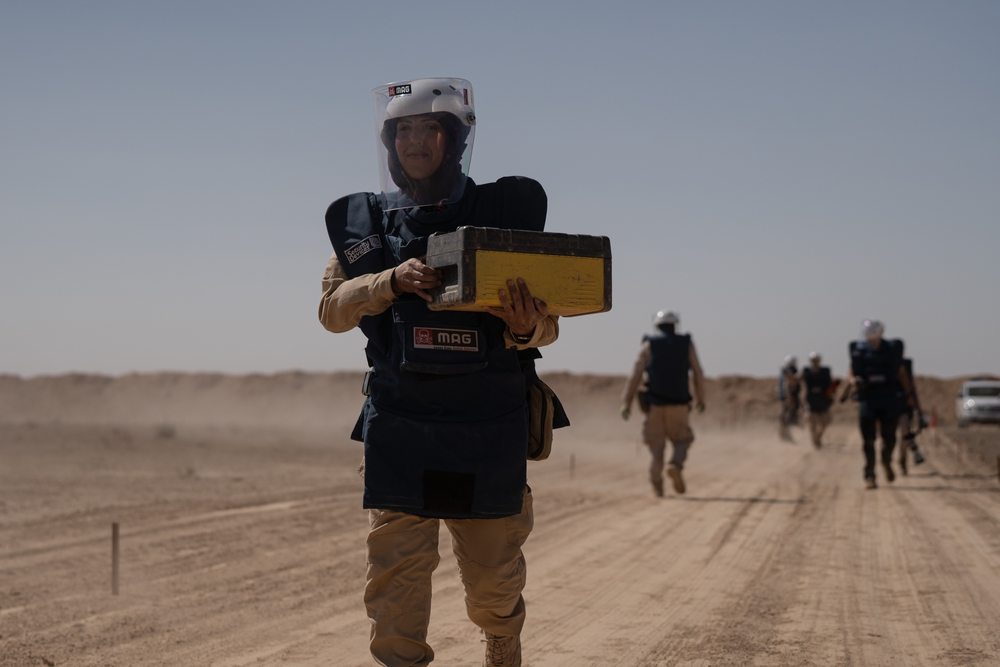
Darren Cormack, MAG Chief Executive, said: “The civil war may have ended, but the suffering has not stopped. Children are being killed or left maimed and traumatised. People are unable to farm their land. Syrians are putting their lives at risk just by returning home. This is a humanitarian emergency and our fear is that the situation will get worse before it gets better.”
Since November 2024, an estimated one million refugees and a further 1.8 million internally displaced people have gone back to their homes. For many, the journey is perilous.
In 15 years of civil war, cluster munitions were used extensively. Conventional anti-personnel and anti-tank mines were laid around military positions, fluctuating frontlines and along strategic road networks. There is also evidence of the use of improvised landmines and booby traps, often in abandoned homes, vehicles and infrastructure.
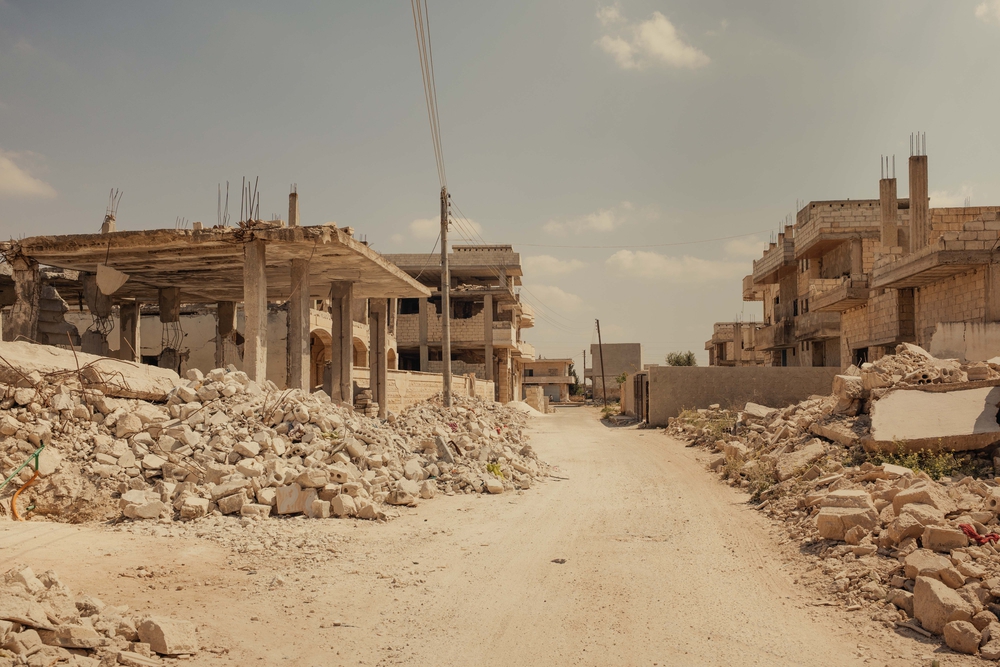
In northeast Syria alone, MAG has identified more than 4 million m² of contaminated land this year, finding cluster munitions and new landmine contamination following the fall of the Assad regime, as well as identifying new areas contaminated with improvised devices left behind by ISIS.
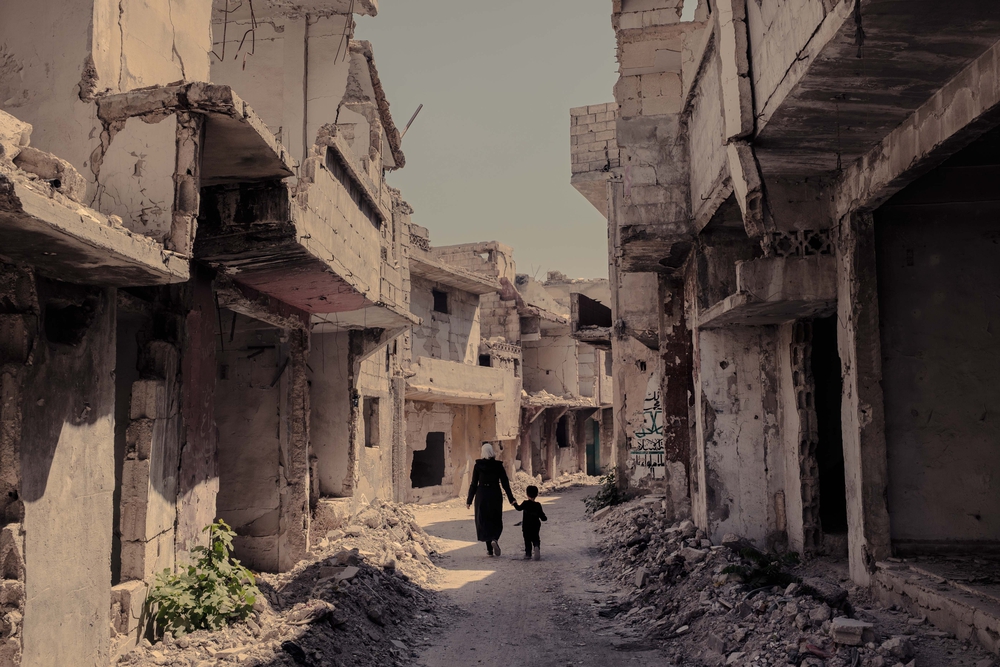
The contamination has been found throughout destroyed homes and buildings, agricultural land, grazing fields, water points, and roads – locations that many returning Syrians are likely to return to.
Mohammed Khalaf, a technical field manager for the MAG working in northeast Syria, said: “People are returning to their homes and encountering multiple threats. The war might be over but contamination is a barrier to recovery – preventing people from returning home safely and cultivating their land.
“It also hampers the restoration of essential infrastructure and services, including education and health.”
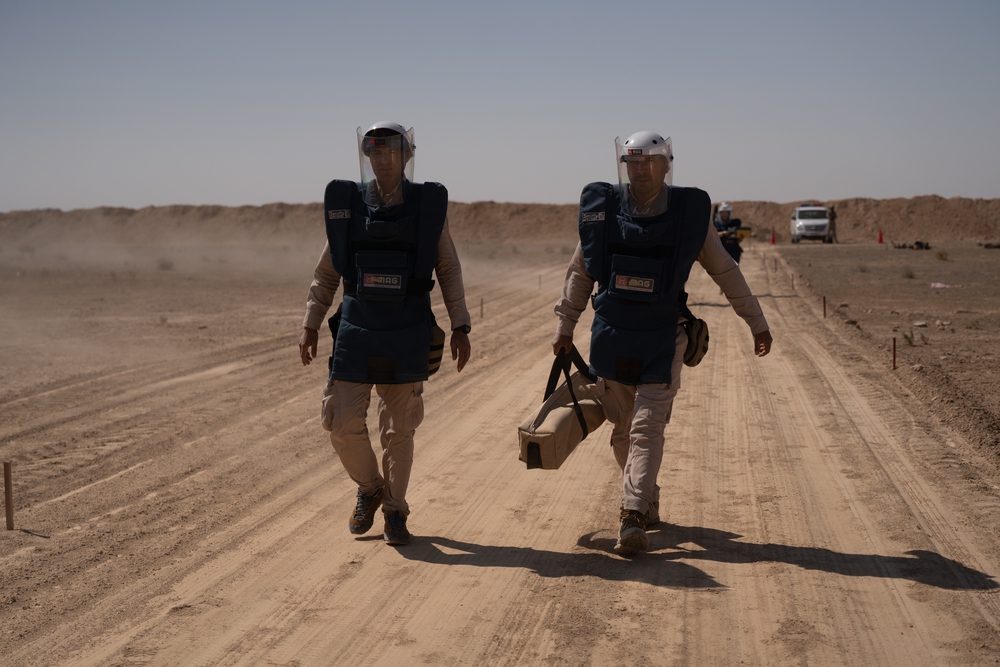
MAG has been working in Syria since 2016 and has found and made safe some 81,000 explosive devices in that time. It currently has more than 220 staff in the country. It says the path towards rebuilding a healthy and resilient Syria lies in a comprehensive demining effort.
On the one year anniversary of the fall of the Assad regime, it is calling on the international community to provide further support to enable rapid expansion of its survey and clearance operations and deliver large scale risk education to communities.
Cormack added: “Previous experience in crises shows that accidents peak when people are trying to return to their homes in the aftermath of conflict – we’ve seen that in post-ceasefire settings such as Lebanon and South Sudan. If basic services cannot be restored, people will be forced to move again, exacerbating the risk of accidents. There are a few hundred trained deminers in Syria – we need thousands.”
MAG expects to extend its humanitarian mine action work into areas around Homs and Hama in the New Year and will be collaborating with local non-profits on a range of initiatives.
Over the last 10 months, the organisation has reached some 10 million Syrians, including refugees in Lebanon and Iraq, with targeted risk education messages delivered through social media and TV advertising.
MAG’s work in Syria is funded by the governments of the United States, Norway, Canada and the Netherlands and by the United Methodist Committee on Relief (UMCOR).
Behind these numbers are the lives of people now navigating this hidden threat. Their stories show the human cost of Syria’s growing landmine emergency.
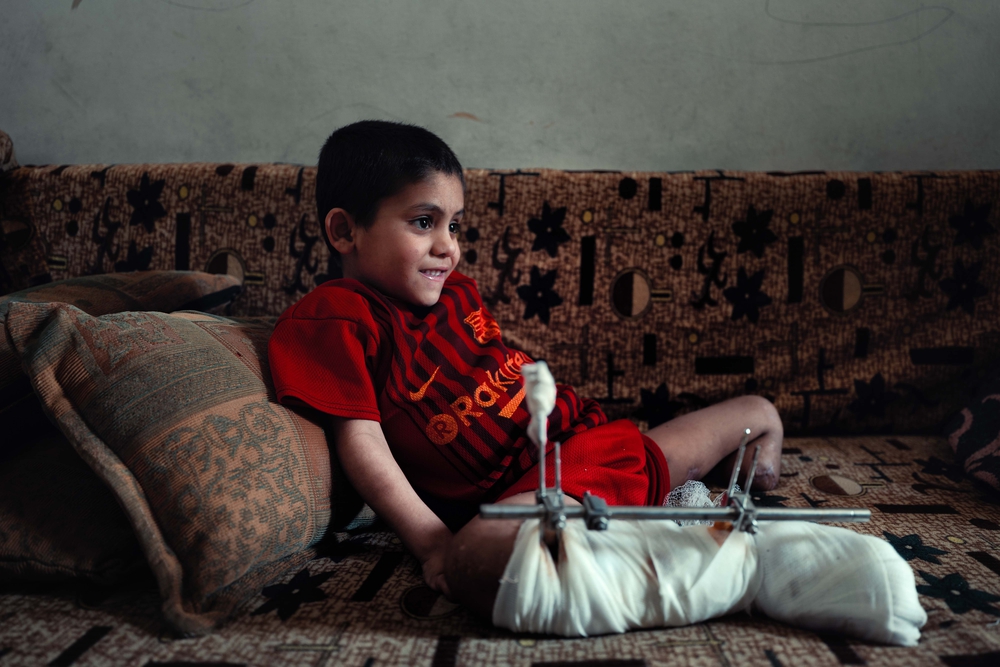
“They thought it was a toy”: Children at the highest risk
For many families across Syria, the danger lies at their doorstep – hidden in the rubble where children play, explore, and try to reclaim a sense of normality.
In Khan Shaykhoun, Mehreen’s three sons were doing exactly that. Abdul, 10, and Omar, 5, (pictured) were outside with their brother Hasan, playing near the remnants of destroyed buildings when they spotted an object they didn’t recognise. To them, it looked like a toy. Seconds later, an explosion shattered their lives.
Abdul lost his right leg, and his left is now held together by a metal frame. Omar suffered similar life-changing injuries. Hasan did not survive.
Their mother, Mehreen, remembers the moment with painful clarity: “I heard them playing and walked outside and, just as I asked them what they were doing, the explosion happened.”
Their father, Mohammed, says the loss and trauma are unbearable: “If I had all the money, I’d give it to see my boys playing again. Our country needs help so our children can be safe.”
The family’s story reflects a tragic pattern emerging across Syria: children are among the most frequent victims of landmines and unexploded ordnance, drawn to objects disguised by dust and rubble, unaware of the danger beneath their feet.
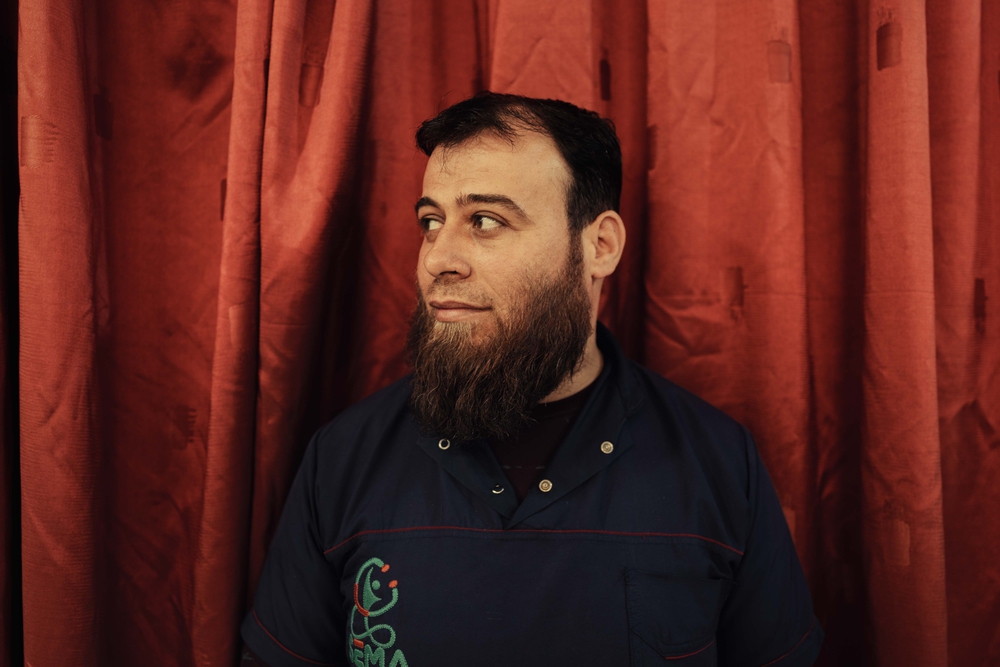
“It is like a flood”: Hospitals overwhelmed by casualties
In northern Syria, medical teams describe a relentless flow of casualties arriving at their doors.
At the Idlib Surgical Specialised Hospital, senior medic Hamed Osman, Head of Nursing, says the situation amounts to “a humanitarian emergency”.
“Four people every day, on average, are being brought into just this one hospital because of landmine or explosive ordnance accidents,” he said. “It is like a flood.”
In the first five months following the fall of the regime, Mr Osman and his team treated almost 500 patients injured by landmines and UXO. Around 60 died. Some 68 were children, five of whom did not survive.
“We used to deal with war injuries. We thought it was over, but now we have another war to deal with.”
Most of those arriving at the hospital were simply trying to resume their lives – farming their land, entering damaged buildings to salvage belongings, or attempting to return home.
Mr Osman believes that awareness and risk education are now among the most urgent needs: “People feel like they have no choice but to return to their land and farm to earn money. Every day lives are being lost because people are not being made aware of the danger.”
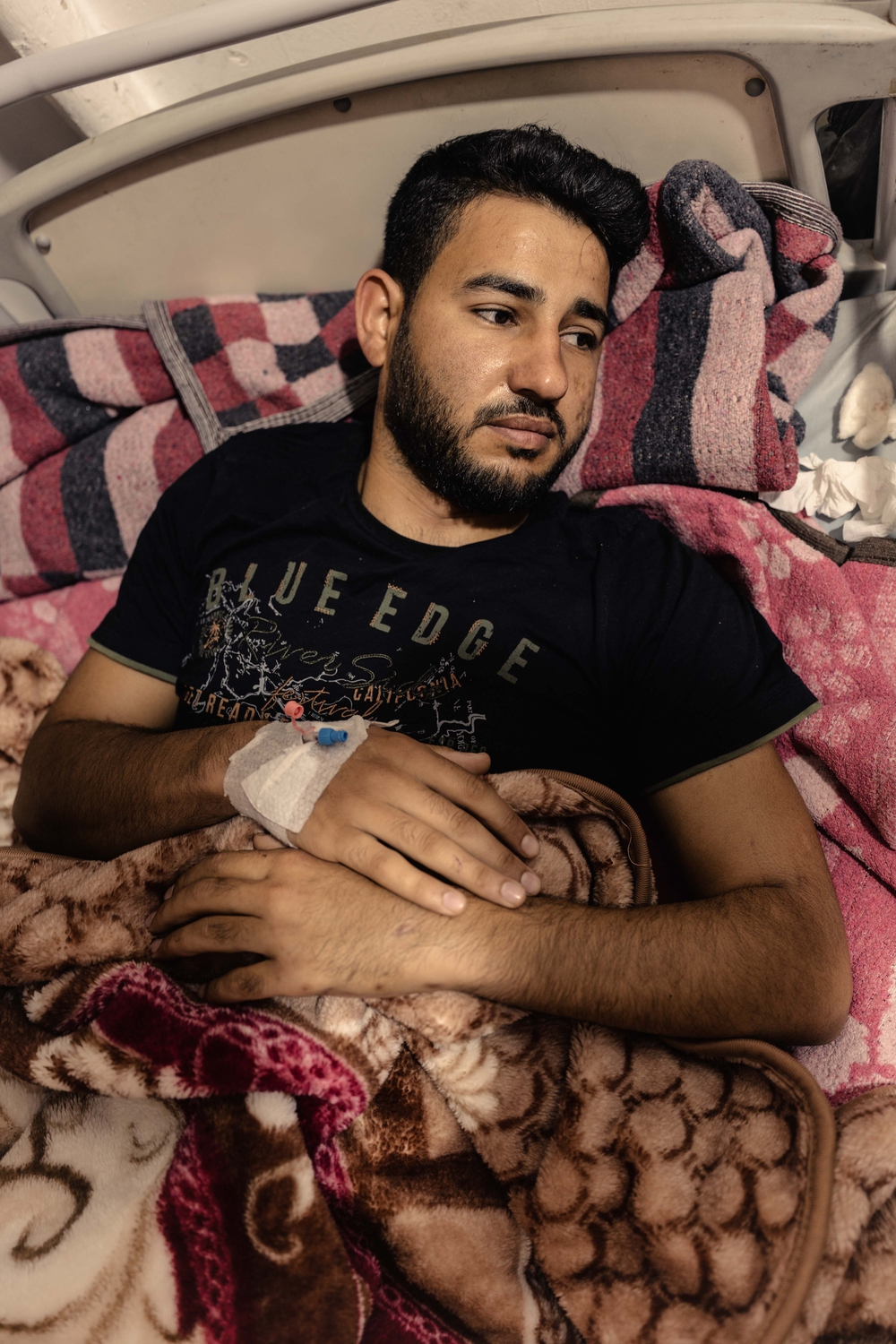
“We have to work to survive”: Livelihoods under threat
Across Syria’s rural areas, landmines are devastating livelihoods as well as families.
Earlier this year, farm worker Muhanna was ploughing a wheat field with three colleagues when his tractor detonated a landmine. He remembers the moment he realised the scale of the explosion: “I was third in the row and drove over a landmine. When it exploded I didn’t realise what it was or that I’d been injured. Then I realised I was badly hurt.”
One of his co-workers suffered severe head wounds from fragmentation and died two days later.
Muhanna, 28, survived, but with catastrophic injuries. His leg bones were crushed; surgeons have taken bone from his hip in an attempt to save his left leg. He also sustained multiple hand injuries.
“We knew landmines were a risk but we thought we would be safe because we assumed our land was not contaminated. We have no choice because we have to cultivate land to survive. We have to work and we have to grow food.”
He says others in his community face the same dangers. One friend was injured recently by a cluster munition while collecting scrap metal from rubble to sell.
Medical staff say many of the worst incidents happen in remote farming areas, far from emergency help, adding to the urgency of deploying more survey and clearance teams.
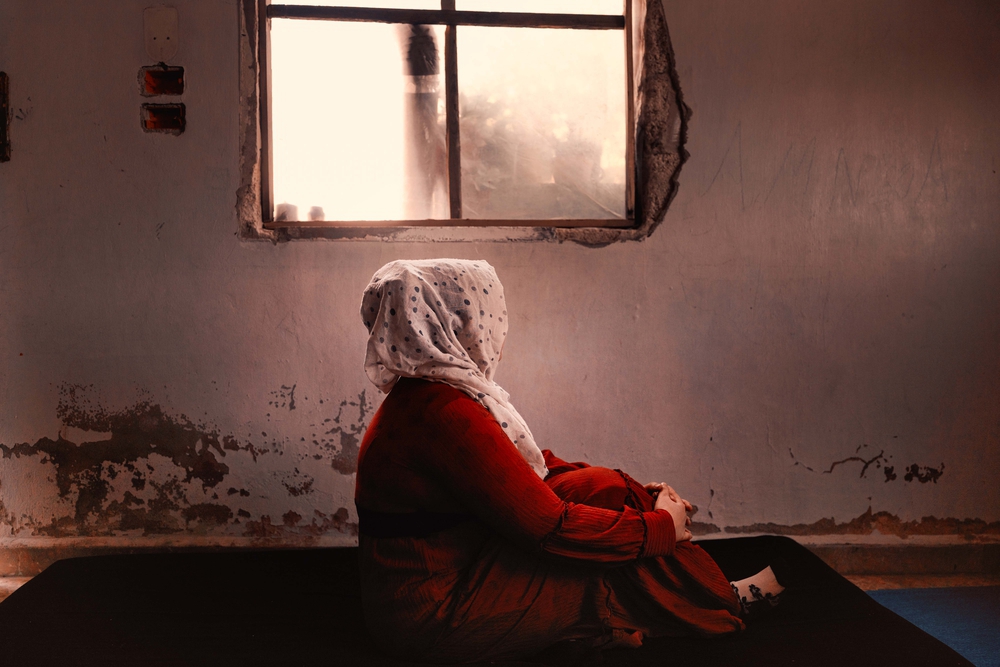
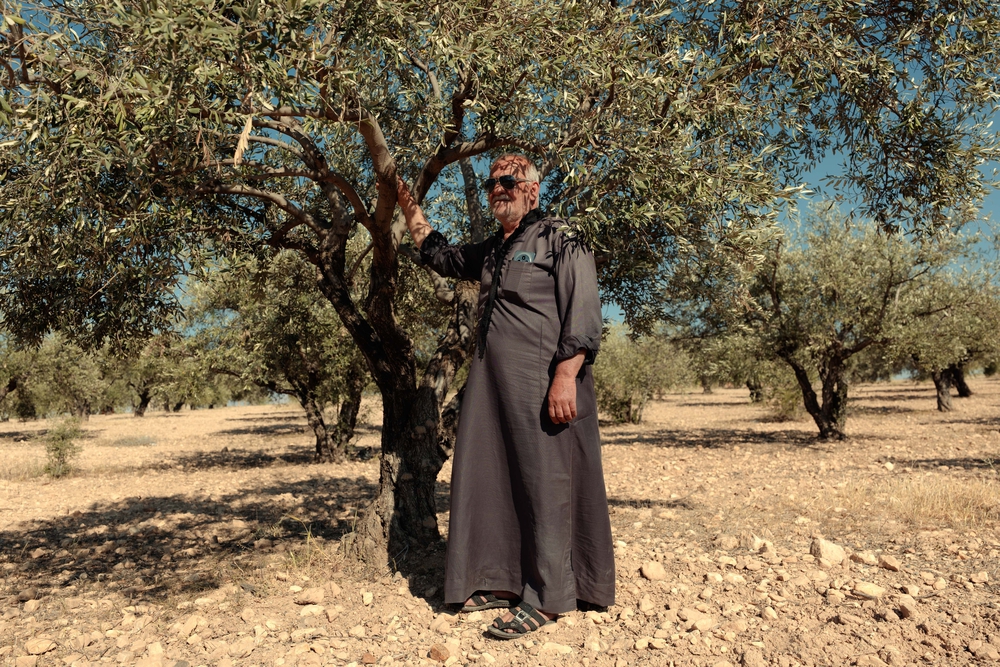
“Our olives rot on the ground”: Families cut off from their land
For Amina, 23, the contamination means the loss of her leg – and the collapse of her family’s livelihood.
Before the war displaced them, her family’s 70-tree olive grove in the Hama region produced 40 or more tanks of high-grade olive oil each season. The grove was their sole source of income.
Last year, driven by economic desperation, Amina’s family attempted to return to harvest the olives. Just days into the harvest, Amina stepped on an anti-personnel mine.
“I remember each and every detail,” she says. “I knew I had lost a foot. Then they amputated just below my knee.”
Her father, Salah, who carried her to safety, narrowly avoided stepping on another mine only metres from the road.
“Now our olives just rot on the ground,” he says. “Our trees are wasted. We have farmed here for 200 years but now we can do nothing. How can we have a living without our land?”
The land is now completely off-limits. Seven family members who depended on the grove must now scrape a living as labourers for other farmers – work that is itself fraught with danger.
Amina says the family still hopes that one day their land can be made safe.
“We pray we can harvest again.”
Images by Emily Garthwaite.


