

I had expected the minefields of northern Sri Lanka to be frightening. I’ve visited minefields with MAG before, so I know the fear of walking through a place where an ordinary step could have devastating consequences.
What I wasn’t prepared for was how ordinary they looked. There was no obvious battlefield. Just traces of long-abandoned trenches, jungle and scrub-covered fields, palmyra trees bending in the heat and birds calling from the surrounding woodland. In the distance, people were going about their daily lives.
And yet, beneath this seemingly peaceful landscape were the remnants of a war that ended 17 years ago.
We have a particular image of landmines, often shaped by Hollywood films. Someone takes a cautious step, hears a deadly click and freezes, knowing that to move could mean triggering an explosion.
The reality is nothing like that. The first pressure can be enough to trigger a blast. There is no dramatic countdown, no opportunity to carefully step away. The danger is immediate.
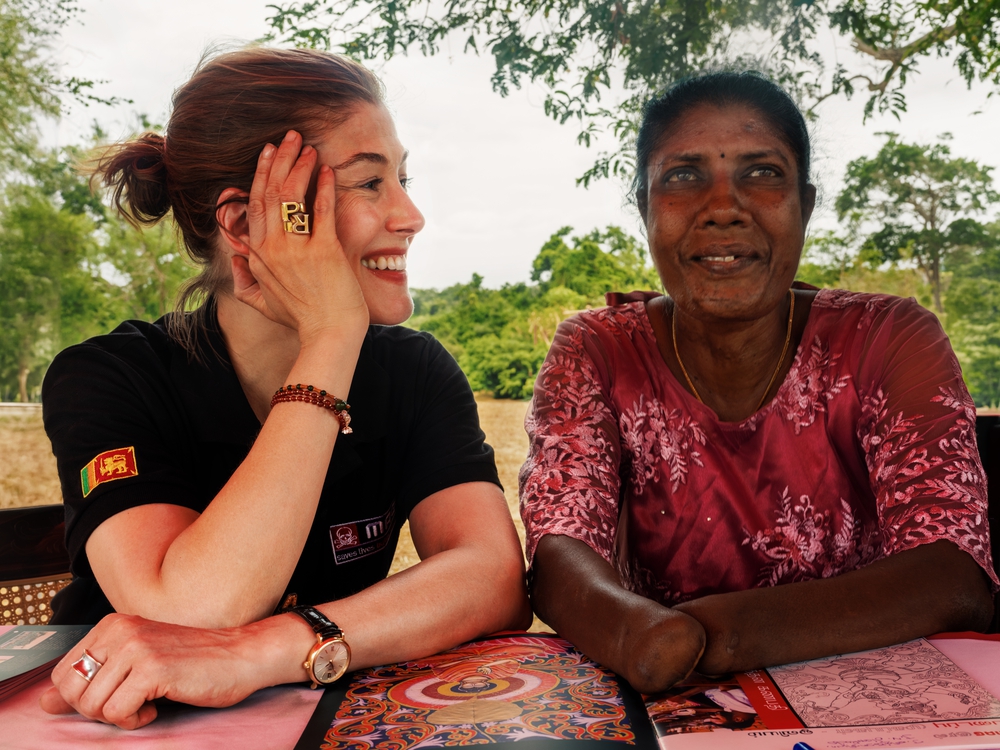
I saw the devastating reality of this when I met Victoria. When she was 18, Victoria found an object while collecting firewood. She didn’t know what it was. Curious, she tried to open it – first biting it, then throwing it on the ground and kicking it. Nothing happened.
Then she lifted it into her lap and pressed down on what she thought might be the lid.
She woke up in hospital without both hands, with part of her face missing and having suffered serious internal injuries.
Victoria’s story could so easily have been one of tragedy. Instead, what I saw was an extraordinary story of resilience and hope.
Today, she leads an independent life, using her wrists for beautiful, precise handwriting, for eating and even for riding her beloved bicycle.
Her story is a powerful reminder of both the devastation landmines can cause and the remarkable strength of those who survive them.
It is also a reminder of why the work of clearing them matters so much.
MAG has been working in Sri Lanka since 2002, when it was one of the first humanitarian organisations to respond to the contamination.
Since the end of the war in 2009, the clearance effort has expanded significantly, with MAG working alongside communities, the Government of Sri Lanka and national mine action partners.
The progress is extraordinary. More than one million landmines have now been cleared, with MAG teams alone clearing 103 square kilometres of land. Mine clearance has helped enable around one million people displaced by the conflict to return home, while landmine casualties have fallen from around 250 a year to just three in 2024.
These numbers are remarkable. But what moves me most is the painstaking human work behind them.
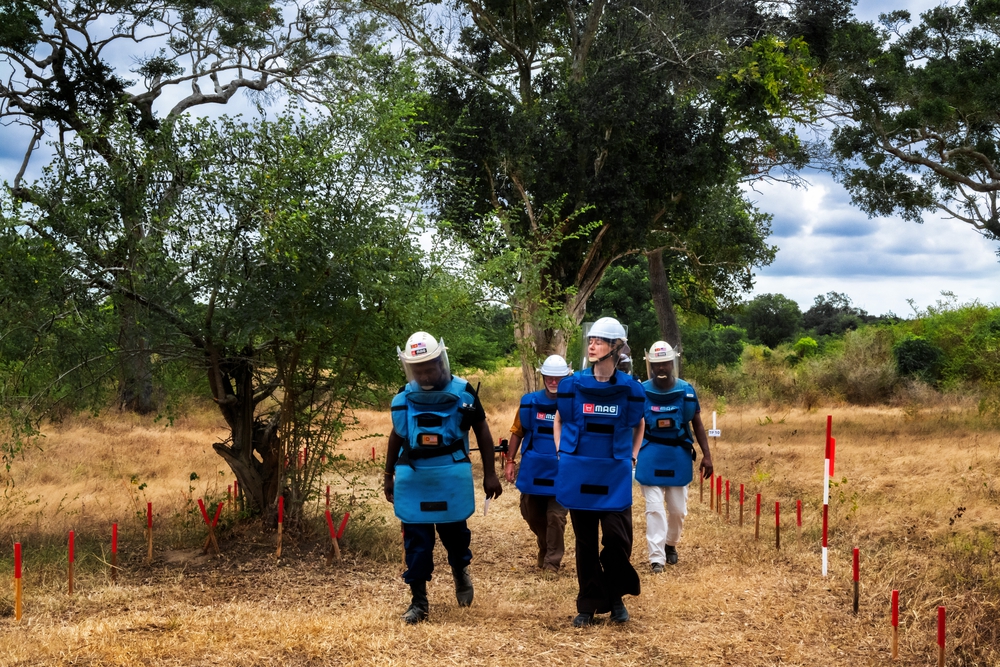
Walking alongside MAG’s deminers, I was struck by the extraordinary precision, discipline and courage their work requires.
A few metres of ground can take hours to clear. Deminers work in Sri Lanka’s hot and humid climate, carrying around 10 kilos of protective equipment and tools. I tried the equipment myself, which gave me a small sense of how physically demanding the work is.
But the greatest challenge is the concentration required to carry out such dangerous work, day after day, knowing that one mistake could cost you your life.
It was also powerful to see so many women playing such an important role in mine action. Many are single mothers, doing demanding work not just to clear land, but to help their communities rebuild and recover.
One of them is Vijaykumary, who has worked with MAG for 13 years. She lost her husband during the war and was left with two young children.
Today, she is helping to clear the explosive remnants of the very conflict that brought so much trauma to her own life, helping to ensure that its legacy is not passed on to the next generation. I find that profoundly hopeful.
And clearance is only part of that work. While mines remain in the ground, risk education is vital.
Children are particularly vulnerable. Naturally curious, with an insatiable desire to explore, they account for around half of landmine and unexploded ordnance victims.
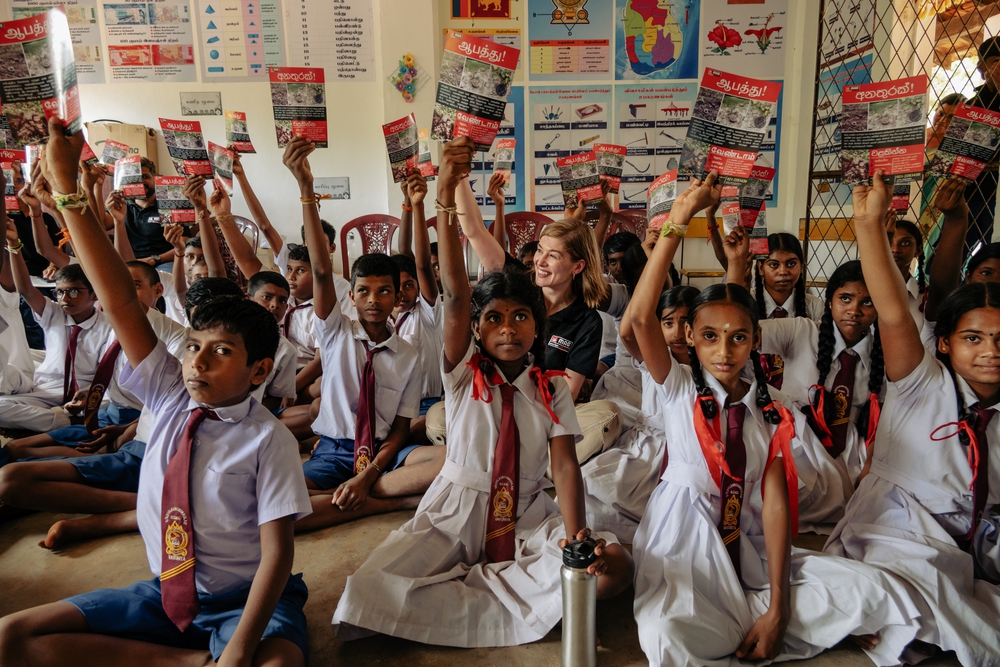
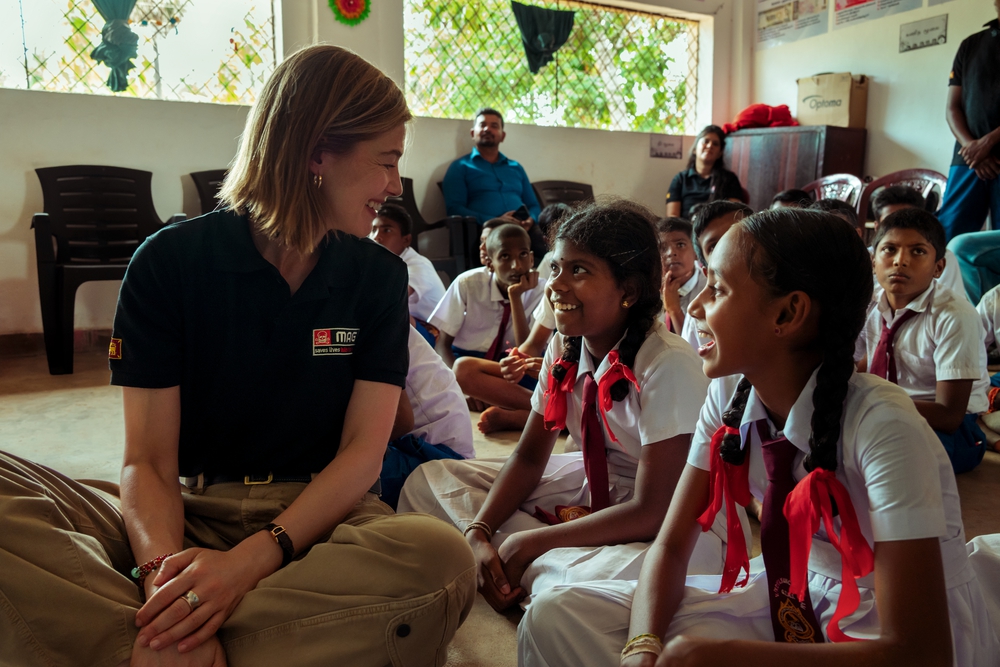
Risk education sessions help children and adults recognise explosive hazards and stay safe in communities where people still farm, travel and live alongside contaminated land.
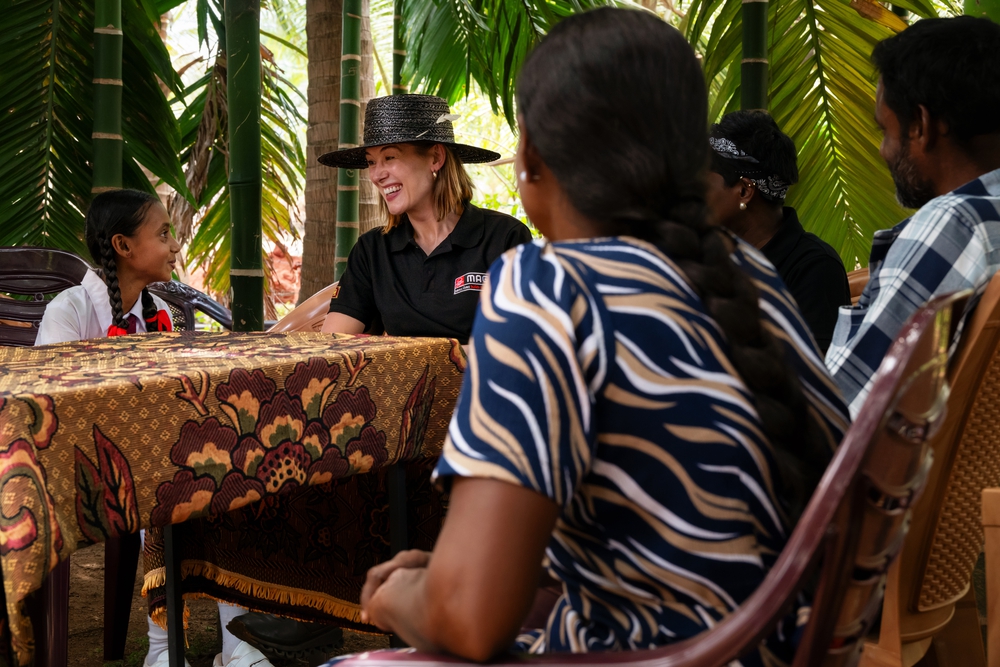
During one of the life-saving lessons I attended, I met an 11-year-old girl who told me she wants to become a judge when she grows up. I found that ambition very moving.
This is what we are protecting – the chance for children to grow up safely and imagine a future unconstrained by the legacy of war. And that future depends on the work happening in the minefields.
When MAG releases land back to communities, people need to know that it is genuinely safe. Safe to farm. Safe to walk through. Safe to harvest from. Safe to live on.
That trust is not easily won. It is earned metre by metre, through careful, painstaking work.
Today, just over 21 square kilometres remain contaminated – roughly half the size of Sri Lanka’s capital city, spread across 11 districts.
The end really is in sight. But the final kilometres are the hardest.
Seeing the remaining contaminated areas on a map is one thing. Seeing them first-hand is quite another. The landscape is vast, with dense, tangled vegetation concealing the ground beneath it. The immensity of this scale versus the tiny size of a landmine is almost impossible to reconcile.
We have already cleared many of the large minefields, where contamination was concentrated and its patterns could be identified.
What remains is much harder to find, with grenades, mortars and other explosive remnants scattered unpredictably, with no clear pattern to follow.
These devices may have been lying there for 17 years. Yet time has done nothing to make them any less lethal – just one landmine left behind could cost a child their life.
The land is vital to the communities who depend on it, and reaching these final areas will require sustained funding.
Without that support, families who have waited almost two decades for safe land will have to wait longer.
Completing clearance will help ensure that future generations no longer have to live with the dangers of a conflict they never witnessed.
And making Sri Lanka free from landmines would be a historic achievement, bringing to an end one of the most dangerous and enduring legacies of the conflict.
Standing in a minefield, I realised that peace is not simply the absence of war.
Sometimes, peace means being able to walk across a field without fear.
It means being able to farm, to play, to travel and to build a home without wondering what might be buried beneath your feet.
It means making the ground safe for the people who call it home.
And that is what mine clearance makes possible.
All photos by Avani Rai
Watch a short film of Rosamund Pike's visit to the minefields of Sri Lanka:
Film by Wolfshoulder


