

In the quiet hills of Cu Nam, Quang Tri, the land holds deep scars. During the war, this small rural area endured a staggering 765 bombing missions, making it one of the most heavily bombed areas in Vietnam.
For decades, explosive remnants of war (ERW) lay hidden beneath the soil, threatening lives and livelihoods with every shovel turned.
But change came in 2015. Responding to a request of local authorities, MAG began an ambitious effort to clear Cu Nam of deadly remnants of war.
Over eight years, with support from the United States Government and the Government of Japan, teams cleared more than 22 million square metres – an area the size of 4,400 football fields – and removed over 11,100 explosive items.
Today, Cu Nam is transforming, not just as land is reclaimed, but as lives are rebuilt.
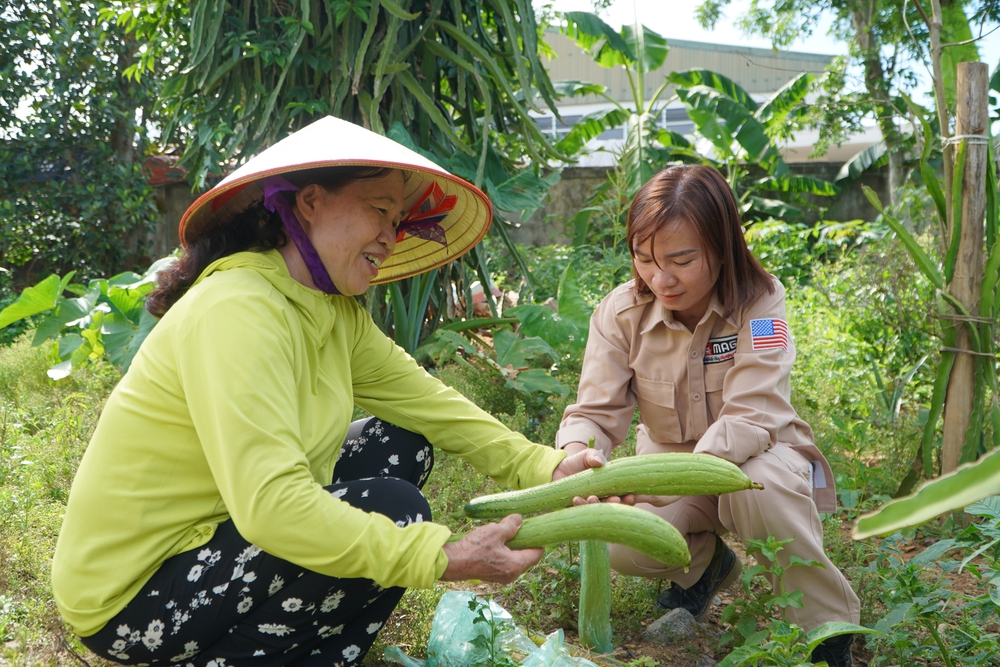
"For us, farming always came with a risk. My father used to say: ‘Bombs find people, people don’t go looking for bombs. So, dig carefully.’"
Tran Thi Ha was born and raised in Cu Nam. The fear of ERW was woven into her childhood, and she still recalls the chilling memory of a neighbour who died after striking a buried bomb while farming.
That fear lingered into adulthood until 2021, until one day, it became terrifyingly real. While tending her garden, Ha and her husband struck something metallic: a cluster munition.
“We were terrified. We reported it to the authorities, and MAG arrived shortly after and safely removed nine cluster bombs from our garden. We were so lucky nothing worse happened.”
Soon after, MAG returned to fully clear the entire area around her home. With the danger gone, Ha says her life – and her relationship with the land – has completely changed.
“I finally feel safe,” she said. “I can plant what I want, dig as I need, and let my children or grandchildren work beside me without fear. It might seem like a small thing, but to us, it means everything.”
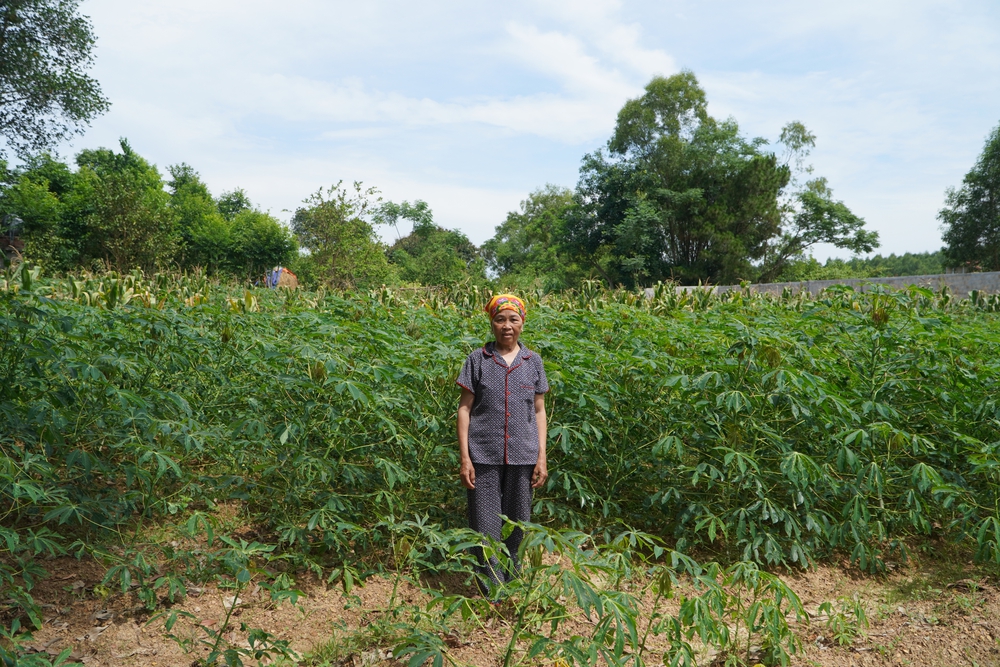
Nguyen Thi Hoa lived with similar caution but harsher consequences. In 1999, while she and her husband were digging in their garden, a buried bomb exploded beneath the soil, severely injuring her husband and leaving him disabled for life.
After the accident, the couple limited their farming to shallow-rooted trees like cajuputs and abandoned large sections of land deemed too dangerous to touch.
“We had no choice. We were farmers," Hoa said. "We had to keep digging to survive, even if we were scared.”
Over the years, Hoa continued to find and report bombs on her property, helping MAG build a clearer picture of local contamination.
Their long wait for safety ended when MAG cleared their land. For the first time in decades, they could expand their farm from 2,500 to 3,000 square metres, planting high-value pepper crops and reclaiming the land once avoided out of fear.
“I’m happy that the land is safe. My children and grandchildren can live without fear, not like us.”
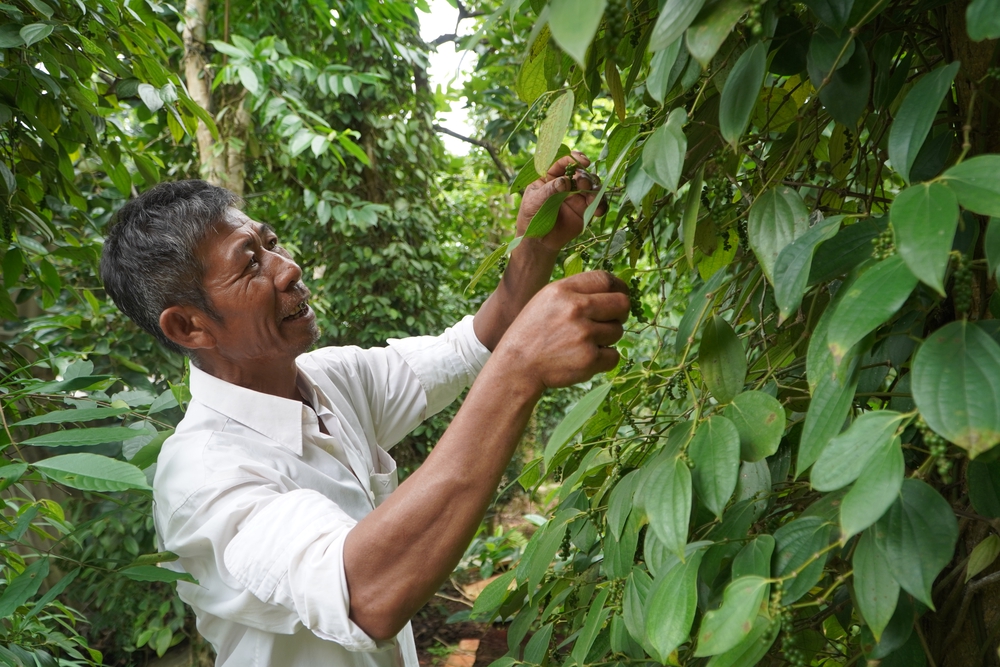
Thiem understands the fear of ERW in a way few others can. In 1986, while working his field with a hoe, a bomb buried beneath the soil exploded. The blast killed one of his relatives and left Thiem seriously injured, keeping him in the hospital for over a month.
“There were times we’d see bombs just lying on the ground. I once gathered a whole basket of them and tried to bury them somewhere else. We didn’t know how dangerous it really was back then.”
Those early years were marked by uncertainty and risk. But everything changed when MAG cleared the land around his home.
With that new peace of mind, Thiem began to plant more confidently. He expanded his farm by 1,500 square meters and began cultivating deep-rooted fruit trees like oranges and peppers, something he would never have dared before.
His hard work and determination did not go unnoticed. Thiêm has been recognized as a model farmer in Cu Nam for several consecutive years, a quiet but powerful symbol of how resilience and safety can grow side by side.
“For someone who’s lived through an ERW accident, clean land feels like being able to breathe again. The fear lifts and you feel lighter.”
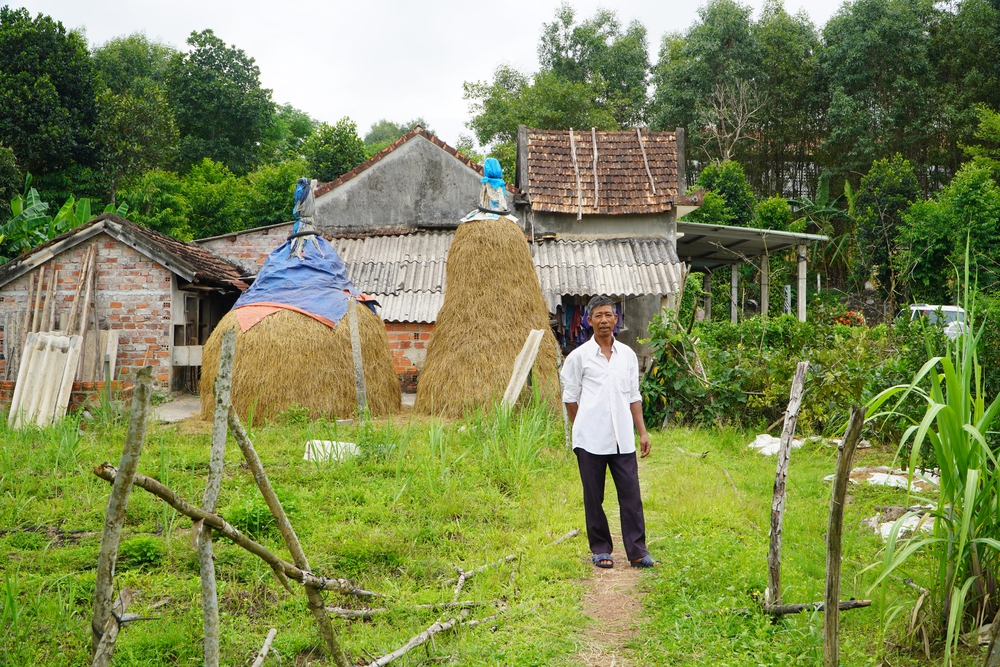
The impact of UXO clearance is visible not just in individual lives, but in the transformation of Cu Nam as a whole. In 2015, only 60% of land in the commune was usable due to contamination. By 2024, that figure had soared to 98.8%, according to the Cu Nam People’s Committee.
Once-idle plots are now productive farmland. Crops grow where bombs once lay. Economic development is no longer stalled by fear – it’s driven by confidence. Cu Nam has reclaimed not just its land, but its dignity, its productivity, and its peace.


