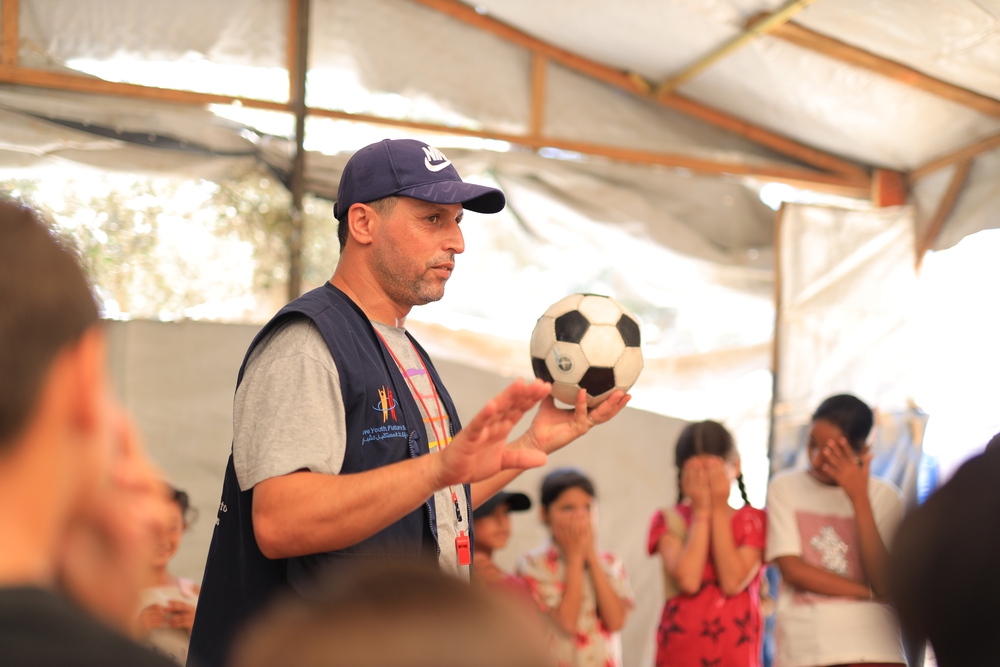

Fadi was forced to flee his home in Beit Hanoun at the beginning of the war. Like thousands of others across Gaza, he sought refuge in shelters and makeshift camps as relentless bombardment devastated large parts of the Strip.
Today, he manages the ‘Love and Giving Camp’ in Al-Zawaida, established in May 2024. The camp is home to around 160 families, most displaced from northern Gaza, including children, women and elderly people.
Fadi liaises with local and international organisations to secure basic services for residents. But aid remains scarce, and families face inadequate lighting, limited access to food and education, and the additional hardships posed by insects and stray dogs.
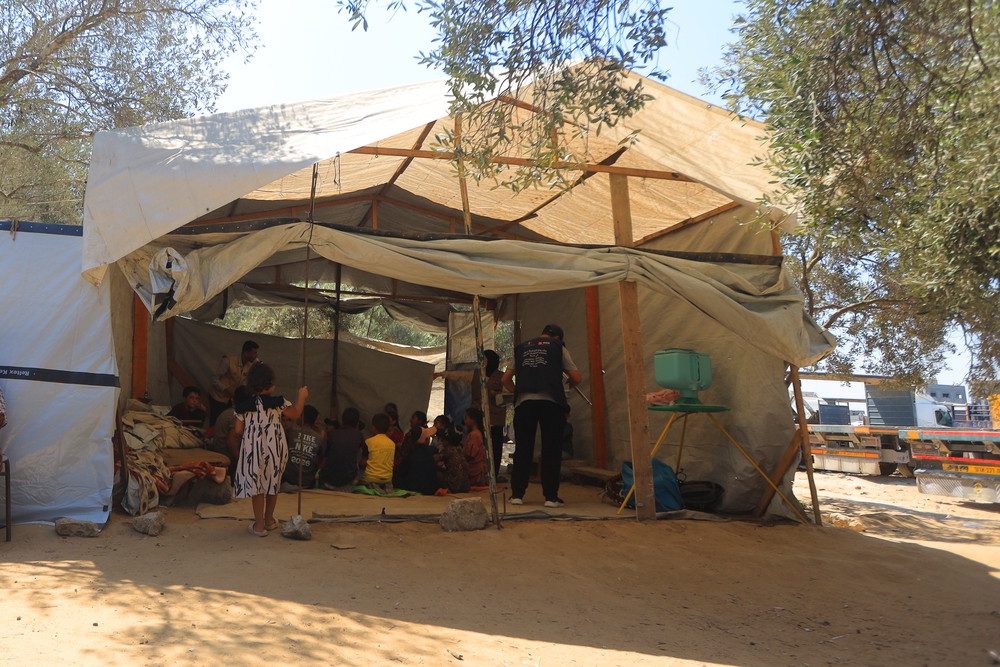
For many, displacement has meant losing not only their homes but also the security and routines of family life.
The early days were marked by fear of bombardment, hunger, thirst and disease, alongside uncertainty over whether they would ever return home.
Children were left in shock, while families crowded into tents and cramped rooms without privacy or even the most basic necessities.
“Since the first days of the war, my family and I were forced to move successively between northern, central and southern Gaza, and we lived under siege in more than one place,” Fadi says.
“One time we left Rafah without carrying anything with us, and we had to sleep in the open before living inside a small tent with nine people. All we hope for today is for this war to end with all its tragedies, and for us to regain part of our lives that we lost.”
For families in the camp, the dangers of displacement are compounded by the threat of unexploded ordnance.
“Some children would approach suspicious objects out of curiosity, while some adults believed that unexploded ordnance no longer posed a danger, or they tried to transport it or sell it for scrap metal, which was putting lives in danger.”
Fadi, Camp ManagerAl-Zawaida, 2026
Scattered across Gaza’s streets, inside destroyed homes and around shelters and refugee camps, these remnants of war pose a grave threat to communities, particularly children, who may mistake dangerous objects for harmless debris.
With basic services, including education, severely limited, raising awareness of these dangers has become increasingly important.
Some residents have underestimated the risks, while others have unknowingly put themselves and their families in danger by approaching or handling suspicious objects.
“Some children would approach suspicious objects out of curiosity, while some adults believed that unexploded ordnance no longer posed a danger, or they tried to transport it or sell it for scrap metal, which was putting lives in danger,” Fadi explains.
To address these risks, MAG has been working with our local partner Save Youth Future Society (SYFS) to deliver face-to-face risk education sessions in the camp.
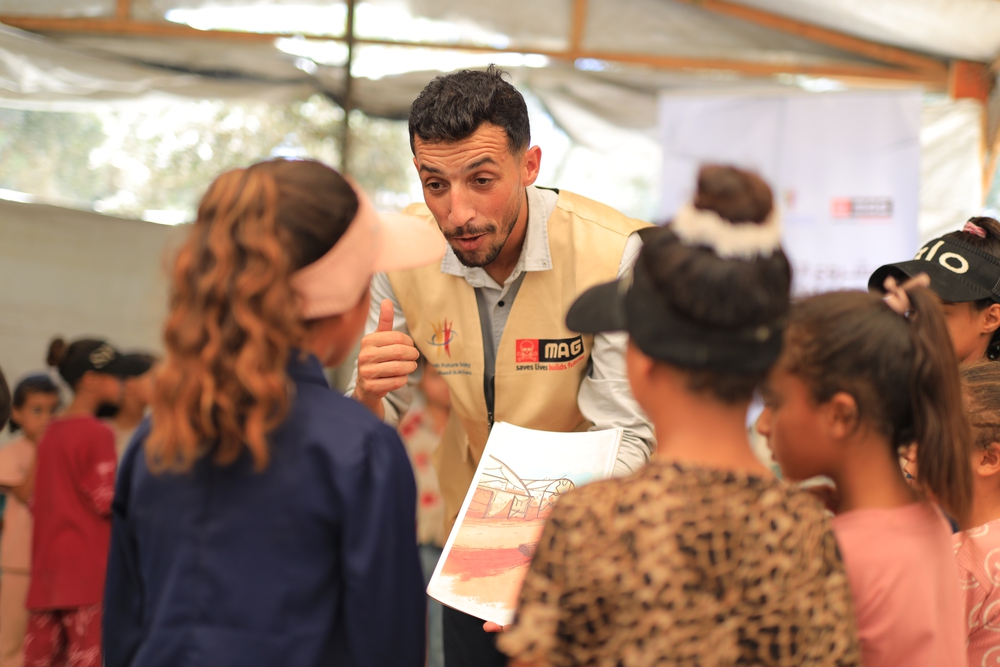
The teams also share life-saving information on social media and provide psychological support to families and children living amid the contamination.
Around 20 teams, comprising more than 60 staff members, are working directly with communities across Gaza. Nearly 40,000 risk education sessions have been delivered so far.
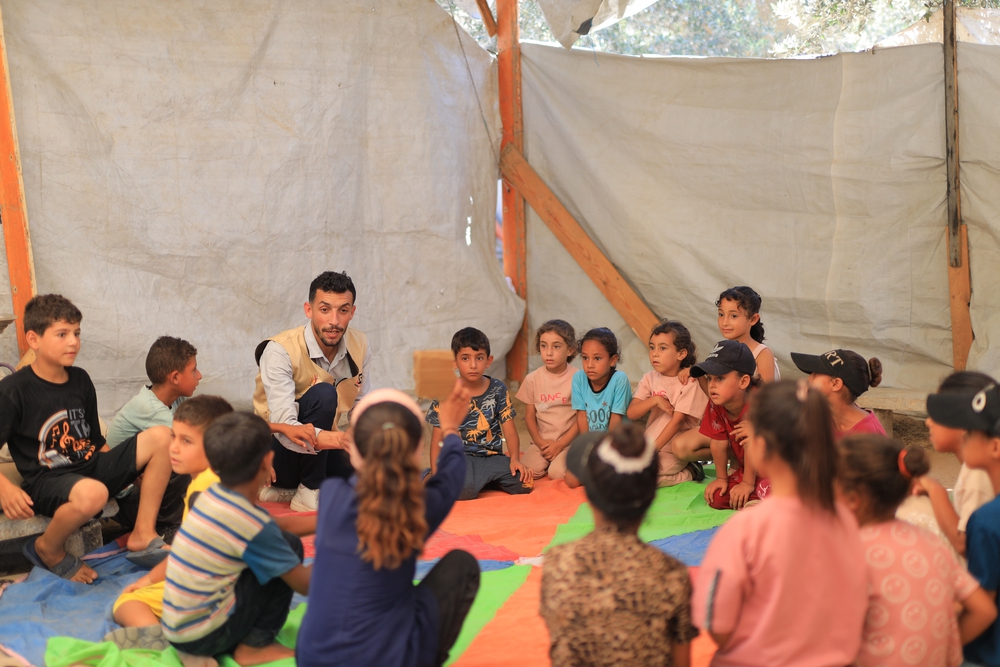
For Fadi, the effectiveness of the sessions lies partly in how the messages are conveyed. Rather than relying on formal instruction, MAG and SYFS teams use games, interactive activities and simple language to help adults and children understand the risks.
“I noticed that each group was receiving information in a way that suited them, which enhanced the participants’ interaction and helped them understand the messages better,” he says.
The impact has extended beyond the sessions themselves. Children repeat safety messages as they play, saying, “Do not touch... stay away... report immediately.” They talk enthusiastically about what they have learned, while parents have become more attentive to their children’s movements.
The camp administration has also begun issuing regular notices urging residents to take care when moving around, particularly near destroyed buildings and rubbish collection areas, where explosive objects may be present. Residents have shared the warnings with relatives and neighbours beyond the camp, extending the reach of the messages.
Alongside practical safety advice, the sessions give children an opportunity to express their feelings through play and art, while families can share their experiences and support one another.
For Fadi, combining psychological support with risk education has been central to the project’s impact.
“The messages we heard from the awareness team restored safety to our hearts before our bodies,” he says.
“I thank everyone who supported this project and contributed to its implementation, because it helps protect innocent people from the danger of unexploded ordnance.
“I say to everyone who believes that awareness sessions do not make a difference, awareness saves lives, and psychological support heals hearts, and when the two come together they make a real difference.”
Chiara Butti, MAG’s Head of Mission for the Occupied Palestinian Territories, says the positive feedback from communities was heartening given the severity of the situation in Gaza.
“Restoring a sense of safety for the people who went through many shocks and displacements goes beyond risk education alone.
Therefore, through our context-specific and conflict-sensitive approach, all our sessions are now trauma-informed.”
Chiara ButtiMAG Head of Mission for the Occupied Palestinian Territories