

Hidden beneath 57 million tons of rubble are thousands of unexploded bombs, turning Gaza into a deadly environment for families.
For many children, the city may look different, but the instinct to explore remains the same. What was once familiar has been reduced to rubble, and curiosity can easily take over. A destroyed street can still seem like somewhere to play. A strange object can still spark interest. A shortcut through debris can feel like an adventure.
But in Gaza today, a single wrong step can cost a life.
That’s why MAG, working through our partner Save Youth Future Society, has delivered more than 30,000 risk education sessions, reaching over half a million people – including over 150,000 children – with vital, life-saving information.
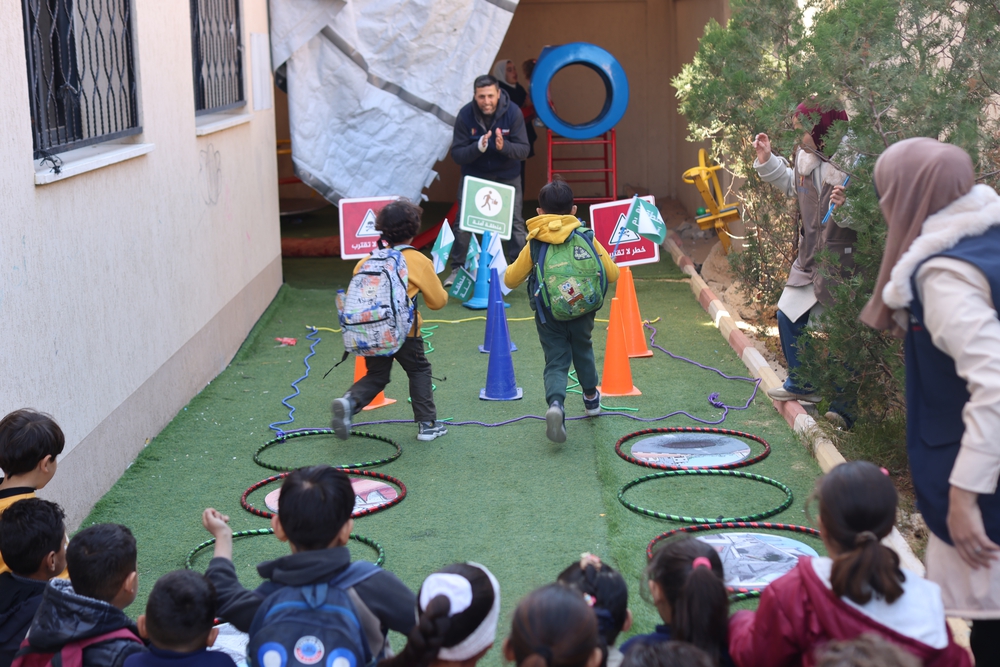
Teaching children about danger in Gaza requires more than simple warnings. It requires approaches they can understand and remember, even while living through trauma.
Risk education has adapted over time to meet these realities. In the early stages, sessions were short and urgent, focused on immediate threats.
As the situation evolved, so did the approach, shifting toward longer, more integrated sessions that combine safety messages with mental health and psychosocial support, recognising the lasting impact of conflict, especially on children.
MAG’s Head of Mission for the Occupied Palestinian Territories, Chiara Butti, said: “The integration of carefully selected activities that are trauma-informed for children increases the likelihood of them understanding the risks that surround them.
"Now in Gaza, all of the risk education sessions have mental health and psychosocial support specialists who pay special attention to children.”
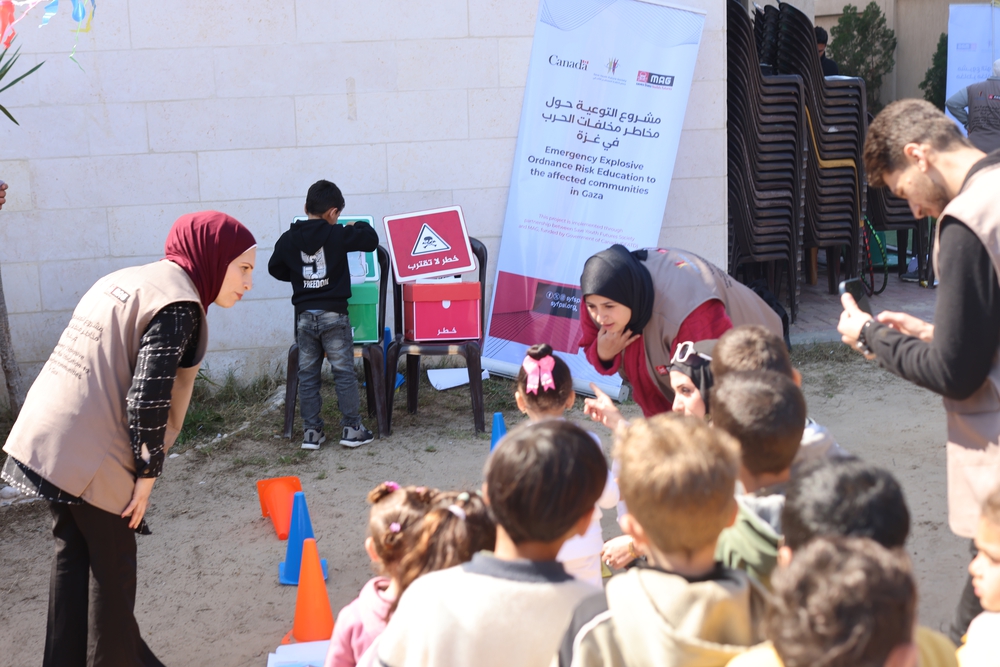
At Friends Without Borders Kindergarten and School in Al-Zawaida, the final school day brought together around 120 children. Through a series of structured games and exercises, they learned how to stay safe, particularly when moving around their communities.
While the atmosphere was joyful, each activity had a serious purpose: helping children navigate a landscape that has become dangerous in ways no child should ever have to understand.
Doaa Hannawi, Save Youth Future Society's Mental Health and Psychosocial Support Specialist in Gaza, said:“Through play, we aim to change children's fear into a protective awareness, with activities like "Safe Path" providing a vital space for them to release their anxieties and learn survival skills in a safe and structured environment.
"The importance of these games lies in their ability to simplify concepts of explosive awareness and transform them into automatic reactions stemming from the child's self-confidence, empowering them to make the right decisions to overcome dangers and always reach safety.”
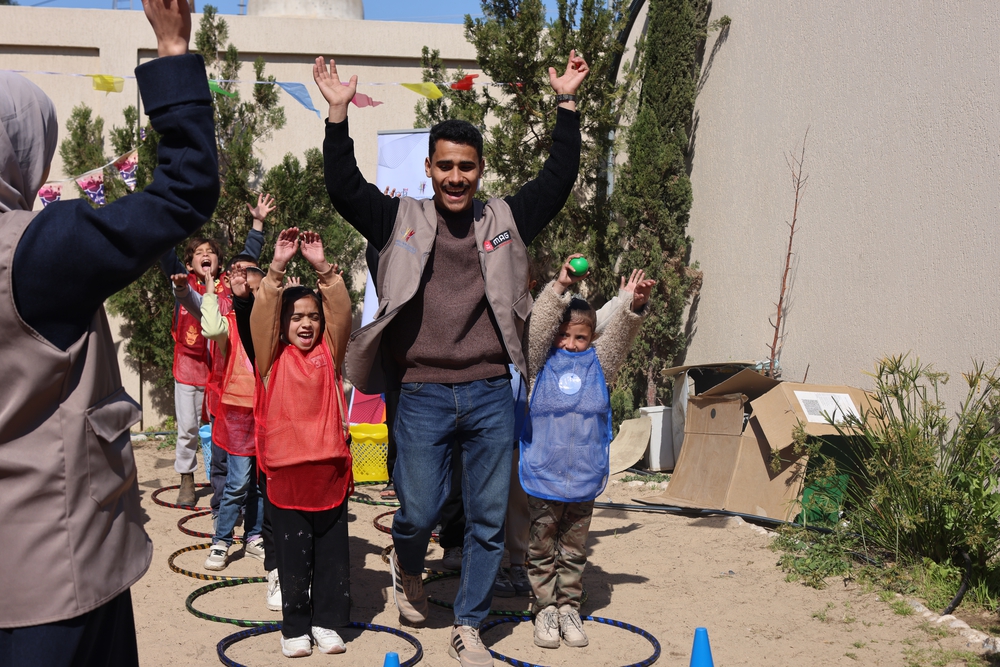
Across the space, children sorted pictures into red and green boxes, learning to recognise what is safe and what is dangerous. Nearby, others followed a “safe path”, stepping carefully around warning signs and avoiding unsafe areas. Murals, songs, face painting, storytelling and puppet shows all helped reinforce life-saving messages in ways that felt supportive and age-appropriate.
For many children, the day feels like a celebration. But it is also something deeper: a space where children can learn together, while taking in lessons that may one day save their lives: stop, do not touch, move away, and tell an adult or call for help.
MAG works across the Occupied Palestinian Territories, delivering life-saving risk education in partnership with Palestinian organisations in Gaza and the West Bank.


