

Caribbean governments have taken a major step towards safer weapons disposal following a regional workshop in Trinidad and Tobago.
Security and policy leaders from 15 Caribbean countries and territories recently met in Port of Spain to discuss the final disposal of weapons and ammunition.
Organised by MAG and CARICOM IMPACS, with participation from UNLIREC, UNIDIR and donor representatives, the workshop addressed a critical gap in weapons management: what happens to firearms and ammunition components after they are destroyed.
The meeting concluded with the launch of a Regional Policy Framework to Sustainably Dispose of Destroyed Firearms and Ammunition Components in the Caribbean, marking an important step forward in regional cooperation, environmental responsibility and armed violence reduction.
The Caribbean experiences some of the highest rates of gun violence globally, with firearms used in more than 70 per cent of homicides.
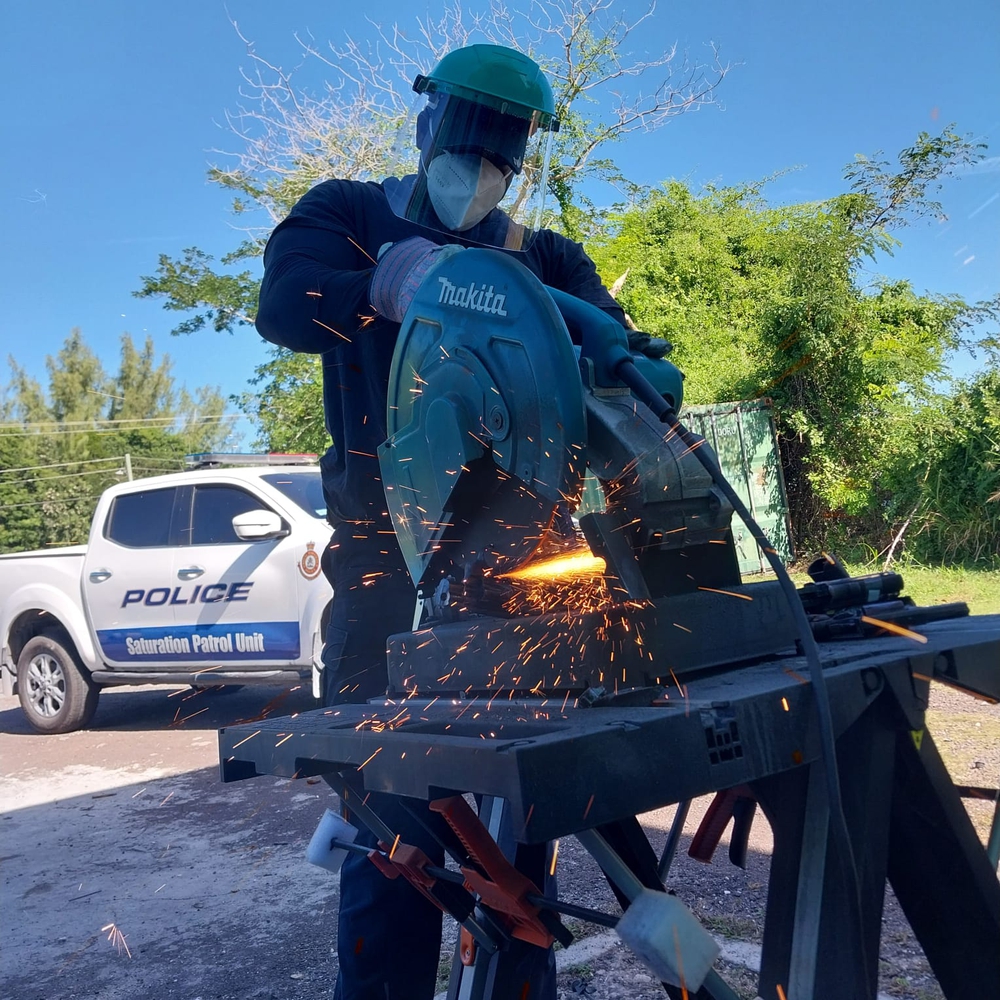
With support from MAG and CARICOM IMPACS, national authorities across the region have destroyed over 3,900 small arms and light weapons and more than 3.3 million rounds of ammunition. However, many states lack safe, lawful and environmentally sustainable options for disposing of the remnants left behind.
Limited access to smelting facilities, restrictive legal frameworks, complex export controls and environmental constraints have left destroyed components stockpiled in already overstretched storage facilities, creating ongoing security and environmental risks.
Developed through six months of consultations and field engagement, the Policy Framework provides clear, regionally appropriate guidance for the final stage of the weapons lifecycle.
It aligns with Goal 4 of the Caribbean Firearms Roadmap, which seeks to reduce the risk of diversion from government- and non-government-owned arsenals, and promotes environmentally responsible disposal, legal compliance with international instruments and regional cooperation to reduce costs and share capacity.
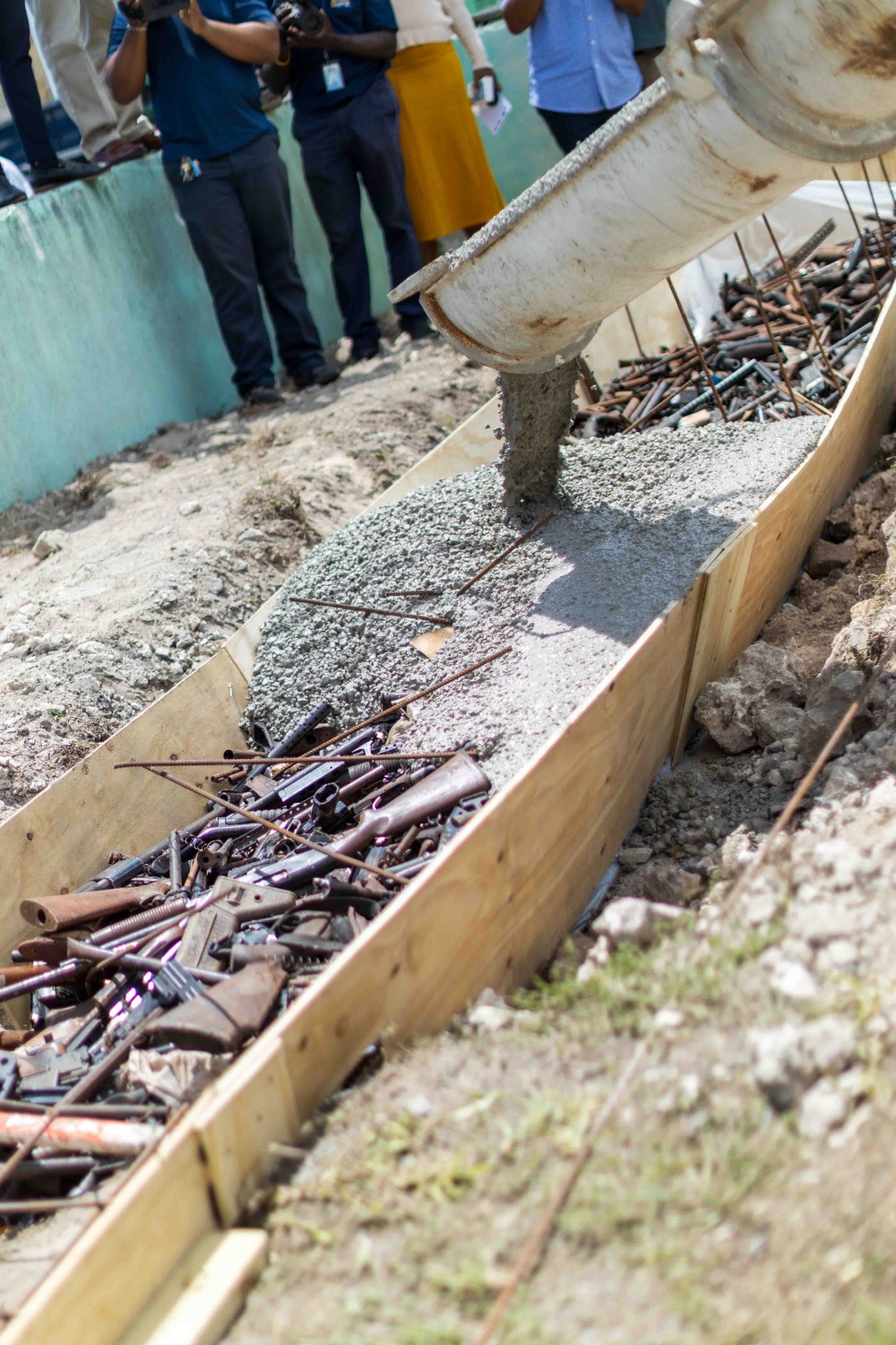
Recognising that long-term disposal infrastructure will take time to develop, the framework outlines practical interim solutions that states can implement immediately. These include encasement, which securely embeds destroyed weapons components in concrete to prevent reassembly and diversion, alongside improved inventory management, appropriate waste classification and secure temporary storage.
Regional commitment was reinforced during a virtual launch of the framework in June 2025, which brought together more than 100 government officials and Caribbean Firearms Roadmap partners. CARICOM states expressed strong support for aligning national policies with the framework, particularly around shared definitions of remnants and permanent inoperability.
Just two months later, The Bahamas became the first CARICOM member state to implement the framework, encasing the remnants of approximately 2,000 destroyed weapons into the foundation of a new police armoury. Belize soon followed, embedding destroyed weapons components into the foundation of a new police station during construction. These early examples demonstrate how the framework can deliver immediate, low-cost and sustainable solutions, even in resource-constrained environments, while strengthening security and reducing environmental risk across the Caribbean.


